
The Nigerian Job Market Doesn't Work Like the Internet Tells You It Does
August 15, 2026
I watched someone lose a role they were actually qualified for, they made it to the interview phase, the hiring manager liked their CV but when asked for proof of work, they had nothing to show.
They didn't get the job.
This happens more often than people realise, and it's almost always because job seekers in Nigeria and Nigerians applying to international companies have been operating from a playbook that stopped working years ago.

The myth most people believe is that "a good CV gets you hired". It's what we've all been told, it's the advice most career websites and pages repeat. And it's wrong!
A CV gets you in the door but that's it. Beyond that, companies want to see what you've actually built, created, or done in the past, they want evidence not just a list of responsibilities you claim you handled.
This matters everywhere, but it hits differently in Nigeria because the gap between what the internet teaches and what the market actually rewards is wider here.
Foreign companies hiring Nigerians are even more skeptical of CVs alone. They're filtering through thousands of applications, so a CV without proof of work looks like every other CV, it's noise. While proof of work is "signal", it cuts through the noise.
Here are some of the biggest misconceptions people carry into job searching:
"My CV is enough if I've done the work."
No. If you haven't documented it, you haven't done it, at least not in the eyes of the person hiring you. They can't see inside your head, they can't verify your contributions if you've got nothing to point to. Your portfolio is proof, without it, you're asking them to just take your word for it.
"Proof of work (POW) is only for designers and developers."
This is a big one. People in marketing, growth, community management, and operations often think PoW is only for individuals in creative fields. Then they sit in an interview and panic when they are asked to show a campaign they ran or metrics backing their claims. Marketing people have portfolios; Growth people have metrics and case studies they can walk through; Community managers have Discord servers, Telegram groups, and event footage. Literally everyone has proof of work if they document it.
"I'll explain my experience in the interview."
Some hiring managers will listen but your proof of work needs to speak louder than your words. Relying on your ability to explain in real-time is risky. You're hoping you remember everything. You're hoping you communicate well under pressure. Why bet on these things when you could just show them?
"Nigerian companies don't care about this the way international ones do."
This is a wrong assumption. Nigerian tech companies, media startups, are actually stricter about this because they're hiring fast and need to filter ruthlessly. Many don't have HR departments to hold their hand through vague CVs. Hence, the need for them to see what you can do.
"I submitted my CV to a web3 project and was called for an interview. They commended my CV but asked for proof of work. I didn't have it. That cost me the role. But now I don't take documentation of proof of work for granted." — Real feedback from someone in the market
The pattern I'm noticing is that people underestimate how much documentation matters until they lose something because they didn't have it.
So what actually counts as proof of work?
For content creators and writers: This may include published articles, case studies, newsletters you've grown and social accounts you've managed with metrics, amongst others.
For marketers: This may include campaigns you've run with results, e-mail sequences, growth experiments with data and screenshots of dashboards showing impact.
For community builders: communities you've scaled, screenshots of member count growth, event attendance number, engagement metrics, Discord invites etc.
For developers and designers: GitHub repos, live projects, case studies explaining the problem you solved.
For operations and growth people: We are looking at spreadsheets showing systems you've built; dashboards you've created; workflows you've optimised; Before and after metrics etc.
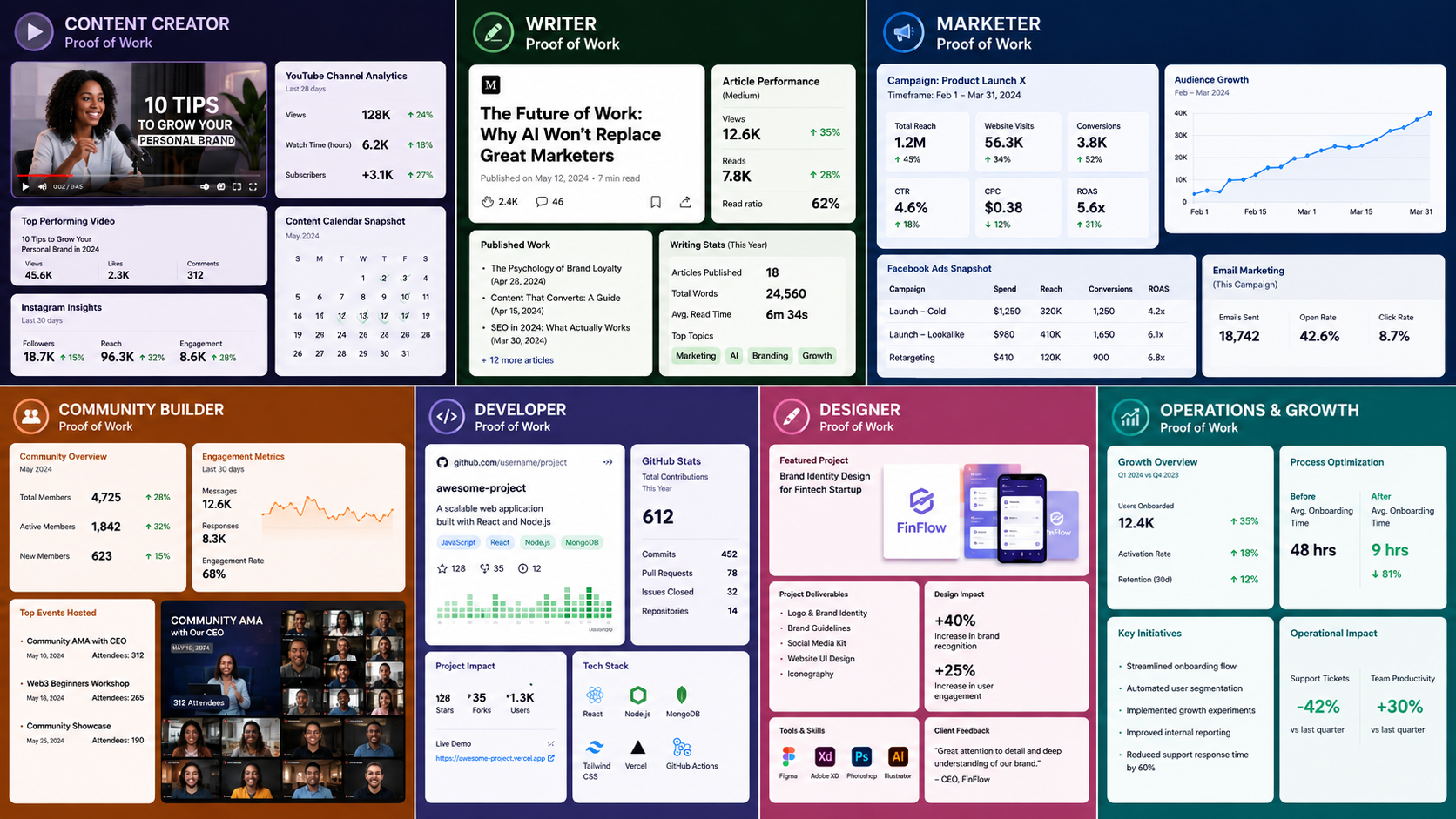
Without a proper portfolio to proof your work, you end up having screenshots scattered across your phone; case studies buried in old emails, metrics you remember but can't find; testimonials from people you've worked with but never asked for in writing, scattered in different folders and links.
By the time you need it (sitting in an interview or applying for a role) you're scrambling, digging through folders, making excuses and losing opportunities because your proof of work is invisible.
The job market has changed, and that's why Ghonsi proof is built for this exact problem. It's a space where you don't just upload a CV and hope. You actually showcase your work, you verify it and you build a profile that hiring managers can trust because they can see what you've actually done.
When you're on Ghonsi, you're not asking someone to imagine your experience because you can show them. Your proof of work is organized, verified, and ready to go the moment someone asks for it.
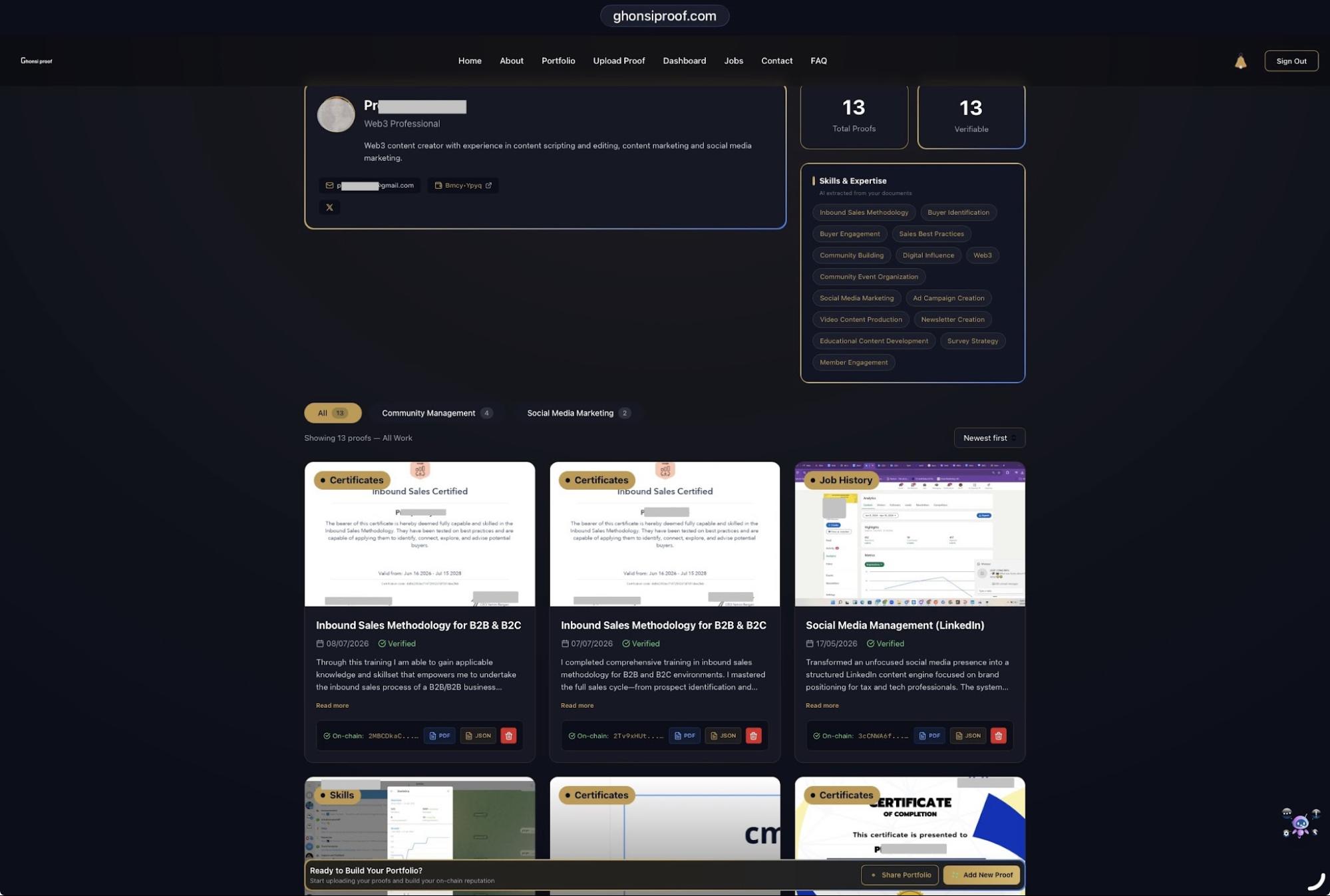
For Nigerian job seekers, this changes everything. For the first time, you're competing on what you can actually show, not just what you claim on paper.
For companies, whether they're Nigerian startups or international teams hiring Nigerians; they get clarity, they see what and when proofs exists.
In the Nigerian job market and increasingly everywhere else too, proof of work isn't optional anymore and has become the difference between being seen and being invisible.
Ready to stop losing opportunities? Build your verified profile on Ghonsi. Show what you've actually done.